Track Spotlight: "The Joy in Life" — The Flamenco Spark of Piano Reveries
Some titles make you guess. “The Joy in Life” doesn’t. It tells you what it’s about, and then it delivers in under two and a half minutes. It’s the third track on Piano Reveries, Michael Clinesmith’s 22-track solo piano album, and it’s where the record first shows how much ground it plans to cover. This spotlight on The Joy in Life walks through where the track sits, why its genre matters, and how to hear it, buy it, or play it yourself.
First, the basics. “The Joy in Life” is track three of twenty-two. It runs 2:27. On the music page’s tracklist it carries the Flamenco tag, and it’s the only track on the whole album with that label. One flamenco piece among twenty-two tracks. That alone makes it worth a closer listen.
The flamenco track on a solo piano album
Flamenco isn’t what most people expect from a piano record. The tradition is usually tied to guitar, handclaps, and dance, with music that leans hard into rhythm and lets you feel every accent. Putting that spirit on the piano is a choice, and on Piano Reveries it tells you something about the composer. Michael doesn’t treat the piano as a one-genre instrument.
The music page tags the album’s tracks across classical, piano, flamenco, funk/soul, neo-classical, jazz, pop, chillwave, and thematic film-score writing. Every label covers the same instrument played by the same pair of hands. The genre tags aren’t decoration. They tell you how each piece wants to move, and “The Joy in Life” wants to move with some fire in it.
It also means the track is carrying a whole genre by itself. Classical has several tracks on this album and so does solo piano. Flamenco has exactly one, so if this corner of the record is going to be represented, this track has to do it alone, in 2:27.
Where it sits: the moment the album wakes up
Track order on Piano Reveries isn’t random, and “The Joy in Life” gets one of the most important spots on the record.
The album opens with “After the Storm,” a 6:44 classical piece and the longest stretch of reflection you’ll hear before anything else gets going. Next comes “Play in the Grass,” four unhurried minutes tagged simply as piano. Both tracks take their time, and both ease you in.
Then “The Joy in Life” arrives, shorter and brighter, in a genre the album hasn’t used yet. It’s the first real sign that this record won’t stay in one lane. If “After the Storm” is the clouds clearing and “Play in the Grass” is stepping outside, “The Joy in Life” is the moment you stop walking and start celebrating.
What comes next makes the placement even clearer. Track four is “Jade’s Lullaby,” a gentle 2:58 classical piece, and one of the tenderest moments on the album. Going from flamenco straight into a lullaby is a bold turn. It works because each track makes the other stand out. The spark makes the hush feel softer, and the hush makes the spark feel brighter when you come back to it.
What “The Joy in Life” feels like to listen to
The honest way to get to know a piece of music is to hear it. Go to the music page and tap play on track three for the 30-second preview. Here’s what to listen for when you do.
The pace. At 2:27, this is one of the more compact tracks on the album. It doesn’t sprawl the way the 7-minute pieces do, and it doesn’t linger. It makes its case, has its fun, and gets out while you still want more, which is usually the sign of a well-built short piece.
The mood. The title is plain and sincere, and the music means it. There’s no irony here and no hidden sadness under a bright surface. It’s a piece about being glad to be alive, and it sits comfortably with the album’s other openly happy moments, like the 1:50 burst of “Joyous” near the end of the record.
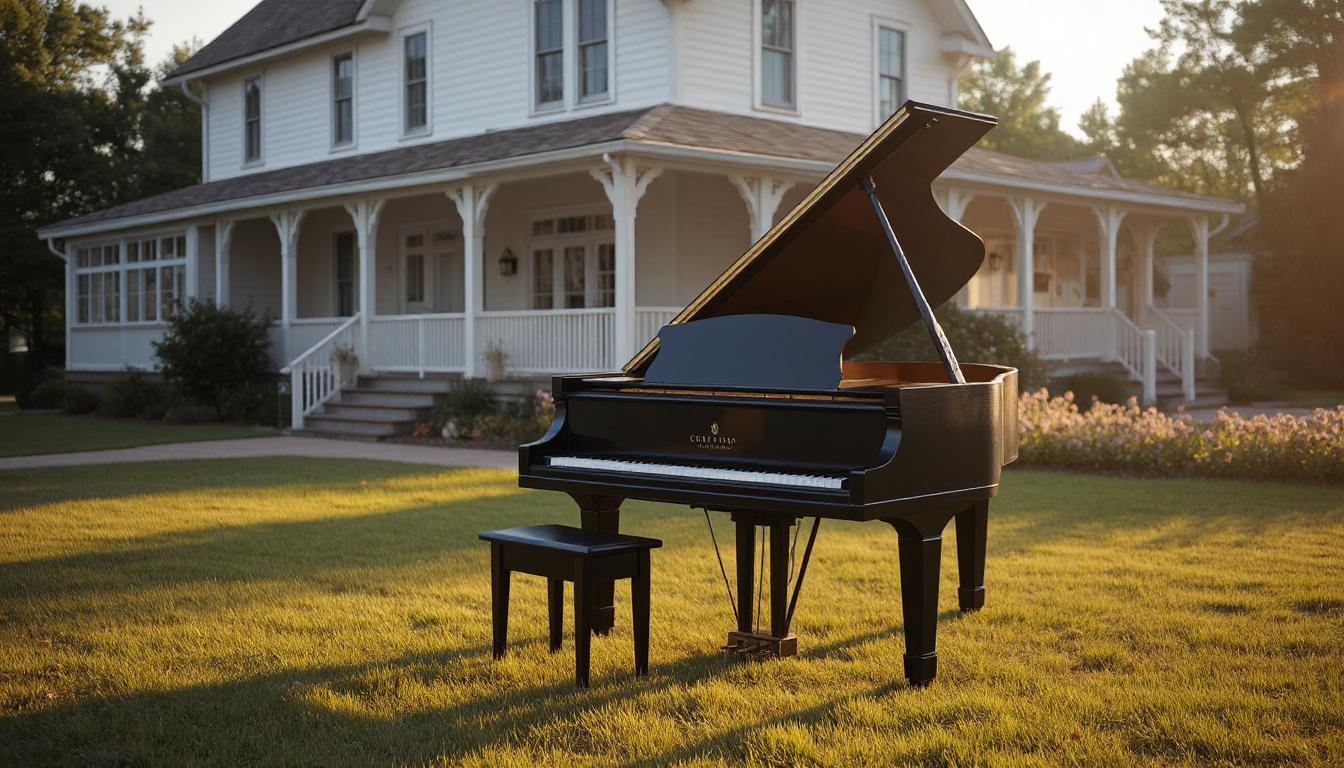
The setting. Look at the image at the top of this page, the track visual used for “The Joy in Life” on the site. A black grand piano stands on a sunlit lawn, lid raised, bench empty, in front of a white farmhouse with a wraparound porch. The light is low and golden, the kind you get at the end of a good day, and a bed of flowers glows along the edge of the grass. Nothing about it is formal. It’s a piano that has been carried outside because the evening was too nice to stay in. That’s a pretty good description of the track, too.
Why a joyful piece belongs on this record
It’s easy to assume serious music has to be sad. Piano Reveries doesn’t buy that. The album has its reflective corners, from the classical calm of “After the Storm” to the three-movement “Sonatina in G,” its most formally built writing. It also makes room for pieces that are simply happy, and it treats them with the same care.
“The Joy in Life” is the earliest example on the tracklist, and it sets the tone for the rest. Later, the album loosens up again with the pop bounce of “Dance in D,” the forward drive of “Race,” and the playful “Step and Dance.” Without this early flamenco spark, the album’s lighter side wouldn’t feel nearly as deliberate. Joy is part of the design here, not an afterthought.
That range reaches beyond the recording, too. In 2025, before the studio album launched, the Vassar City Band performed Piano Reveries live as a full ensemble, taking Michael’s piano-led compositions into orchestra territory. Pieces that can survive that kind of translation are real compositions, not just recordings.
Where to listen to, buy, and play “The Joy in Life”
The right place depends on what you want to do with the track.
Hear it and own it. Everything starts on the music page. You can preview all 22 tracks there, buy “The Joy in Life” on its own for $3, or get the full Piano Reveries album for $9.99. Buying direct is the most meaningful way to support the studio. The album version also lets you hear this track where it belongs, right between “Play in the Grass” and “Jade’s Lullaby.”
Stream it. Piano Reveries isn’t on Spotify or Apple Music yet, because distribution is still in progress. To hear the moment it goes live, sign up for the newsletter at the bottom of the music page. In the meantime, new music from the studio goes up free on the Endtime Entrepreneurs YouTube channel.
Play it yourself. Michael’s sheet music is published on Sheet Music Plus and Sheet Music Direct. Search his name to see what’s currently in the catalog. A lively two-and-a-half-minute piece is a great challenge for pianists who want something with personality.
Support what comes next. Patreon members get exclusive tracks, exclusive sheet music, and behind-the-scenes looks at new work. It’s the most direct line between a listener and the composer, with no retailer taking a cut.
Hire the person who wrote it. If your film, game, or project needs music with this kind of energy, Michael takes custom composition work through SoundBetter.
The world around the music
Piano Reveries shares a studio and a composer with Rebellion, the indie RPG from Endtime Entrepreneurs. You can play Rebellion on Steam, and its original score is sold separately as the Rebellion Soundtrack DLC. Michael writes both the games and their music, and Airy the Dragon, the studio’s mascot, ties the two halves together. You can read the full story on the about page.
Let it lift your day
Plenty of tracks on Piano Reveries will ask you to slow down and reflect. “The Joy in Life” asks something simpler: be glad for a couple of minutes. It’s short, bright, and sincere, and it’s the only flamenco piece on the album.
Preview it on the music page, turn it up, and see if it changes your afternoon. If there’s a track you’d love to see spotlighted next, get in touch. We read everything.

 Track Spotlight
 Track Spotlight: "Lovely Night" — The Jazz Heart of Piano Reveries
A spotlight on "Lovely Night," the jazz piano track from Piano Reveries — one of Michael Clinesmith's earliest compositions, and where to hear, buy, and play it.
 The Studio
 Play It Yourself: Where to Find Michael Clinesmith's Sheet Music
A guide to finding Michael Clinesmith sheet music — where his piano scores are published, what Patreon members get, and how to go from listening to Piano Reveries to playing it.
The Studio Behind the Piano Reveries Album Cover
A close look at the Piano Reveries album cover — the dragon at the grand piano, the warm light, and what the art tells you about the music before you press play.