One World: How Rebellion and Piano Reveries Connect
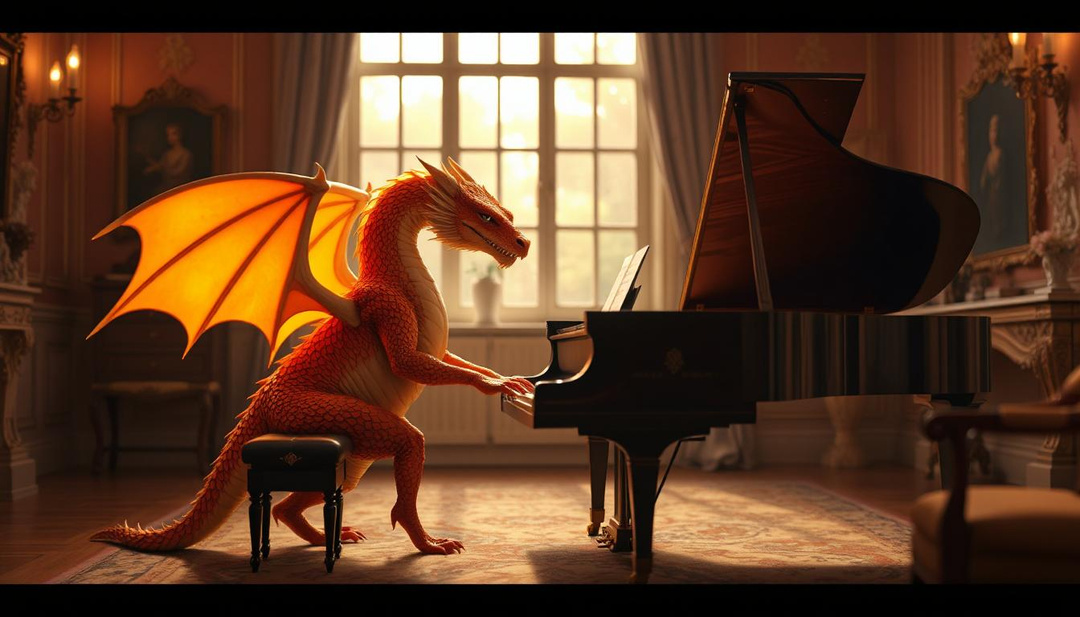
Most indie studios hire a composer. Most composers never ship a game. Rebellion and Piano Reveries come from the same desk, the same hands, and the same stubborn idea — that a small world deserves a big sound. One is an indie RPG on Steam; the other is a 22-track solo piano album. They look like two separate products. Spend an hour with both and you realize they’re one project wearing two coats.
Rebellion and Piano Reveries: two projects, one set of hands
Endtime Entrepreneurs sits at an unusual intersection. It’s the indie game studio that also writes its own albums, and the music project that also ships RPGs. Michael Clinesmith writes the code and the melodies, which changes the order everything happens in. There’s no brief handed to an outside composer six weeks before launch. The music and the world grow up together, arguing with each other, until both sound like the same place.
The timeline makes the overlap obvious. Long before there was an album, Michael was writing standalone piano pieces — Bb Melody, Minor Major 2, Lovely Night — that had nowhere in particular to go. Then Rebellion went live on Steam in beta, with its own original score and its Soundtrack DLC close behind. Then, in 2025, the Vassar City Band performed Piano Reveries live as a full ensemble. Then the finished 22-track album arrived. Those aren’t four unrelated milestones. They’re one body of work surfacing in whatever format fit at the time.
That’s the honest answer to “which came first.” Neither did. The pieces existed, the world needed music, the music outgrew the world, and eventually both got proper homes — one on Steam, one on the music page.
What game scoring taught the album
Writing for a game imposes a discipline that writing for an album does not. A game cue loops. A player might hear the same forty seconds for twenty minutes while they read dialogue, backtrack, or wander a map for the third time. So a game theme has to be interesting immediately and survivable forever. Anything gimmicky burns out on the fifth pass.
You can hear that constraint in Piano Reveries, even though the album never loops anything. The pieces are built on real melodies with real harmonic movement — nothing hiding behind volume or effects. After the Storm opens the record on a classical footing precisely because it’s a tune that holds up on repeat listens. Working Through It is patient rather than showy. The Sun Will Rise Again is thematic in the literal game-score sense: a motif built to mean something, not just to sound nice once.
Games also teach economy. When one person is writing the score for their own project, there’s no budget for an orchestra and no room for filler. Every idea has to justify its runtime. That’s part of why the album is 22 short pieces instead of eight long ones — it’s a composer used to writing miniatures that do a specific job.

Shared moods: storm, joy, resolve
An RPG needs a vocabulary of feelings. Somewhere to rest. Somewhere to hurry. A moment that hurts. A moment that pays off. Listen to the album straight through and you’ll notice it covers exactly that same emotional map — which is what happens when a composer’s instincts were trained on interactive storytelling.
There’s rest: Jade’s Lullaby and Play in the Grass, the kind of pieces that would score a safe village or a quiet morning before everything goes wrong. There’s motion: Race and Dance in D push forward the way a chase or a festival scene does. There’s the sheer physical joy of The Joy in Life, a flamenco piece that would feel completely at home over a celebration. And there’s difficulty and recovery — the thread from struggle to daylight that any decent RPG arc walks, and that the album walks too.
Then there’s structure. The three-movement Sonatina in G is the most classically built thing on the record, and it’s the clearest proof of the composer’s other habit: developing one idea across a whole arc rather than restating it. That’s leitmotif thinking. It’s how you write a theme for a character like the Wizard, Rebellion’s hooded figure, and then bring it back later, slower and sadder, once the story has done something to him.
The most personal tracks close the loop in the other direction. For Grandma is a funk/soul piece with a title that tells you exactly who it’s for. Happy Anniversary is the only piano-and-voice track on the album. Those aren’t game cues — they’re the reason the game cues have warmth in the first place.
Airy the Dragon ties it together
If you need one visual proof that this is a single world, it’s on the album cover. Airy the Dragon — the orange cartoon dragon who runs through the games, the brand, and Michael’s own composing handle, AiryTheDragon — is sitting right there at the piano.
That’s not a marketing decision bolted on afterward. Piano albums usually reach for a grand piano in soft light or a moody portrait. This one puts a game character on the sleeve, because the record genuinely came out of a place where games and music are the same job. The dragon on the cover is the same dragon in the worlds, and both are the same person at the keyboard.
It also sets expectations correctly. Airy is warm, earnest, slightly playful — and so is the music. Eight genres, from classical to flamenco to funk/soul to chillwave, all anchored by piano, all sincere without being solemn. Joyous and Step and Dance are exactly what a friendly dragon’s album should sound like.
Explore both worlds
The best way to hear the connection is to experience both halves. Play Rebellion on Steam and let the score do its quiet work in context, then pick up the Soundtrack DLC so you can keep it. After that, listen to and buy Piano Reveries — 22 original tracks that share the same melodic DNA, with Spotify and Apple Music on the way.
If you want more of the world, the free itch.io title A Guinea’s World has music by AiryTheDragon too, and new music lands on the Endtime Entrepreneurs YouTube channel. Pianists can play these pieces themselves through Sheet Music Plus and Sheet Music Direct. Supporting the studio directly happens on Patreon, which is what keeps a one-person operation shipping. And if you’re building your own game and want a score with this kind of warmth, Michael takes commissions through SoundBetter.
A game and an album shouldn’t have this much in common. These two do, because they were never really separate — just one world, told twice.
If this resonated, you can listen to and buy Piano Reveries, learn more about the music, or get in touch about a custom score.
 Track Spotlight
 Track Spotlight: "Minor Major" and "Minor Major 2" — Fifteen Minutes on One Idea
A close listen to the paired "Minor Major" pieces on Piano Reveries — two of the longest, most exploratory solo piano tracks by Michael Clinesmith.
 Track Spotlight
 Track Spotlight: "Play in the Grass" — Piano Reveries at Its Most Playful
A close listen to "Play in the Grass" from Piano Reveries — the light, bright, playful solo piano piece by composer Michael Clinesmith.
 Track Spotlight
 Track Spotlight: "The Sun Will Rise Again" — the Album's Long Sunrise
A close listen to "The Sun Will Rise Again" from Piano Reveries — the hopeful, 8:42 thematic piece that is the longest track on Michael Clinesmith's 22-track album.