Behind the Piano Reveries Album Cover
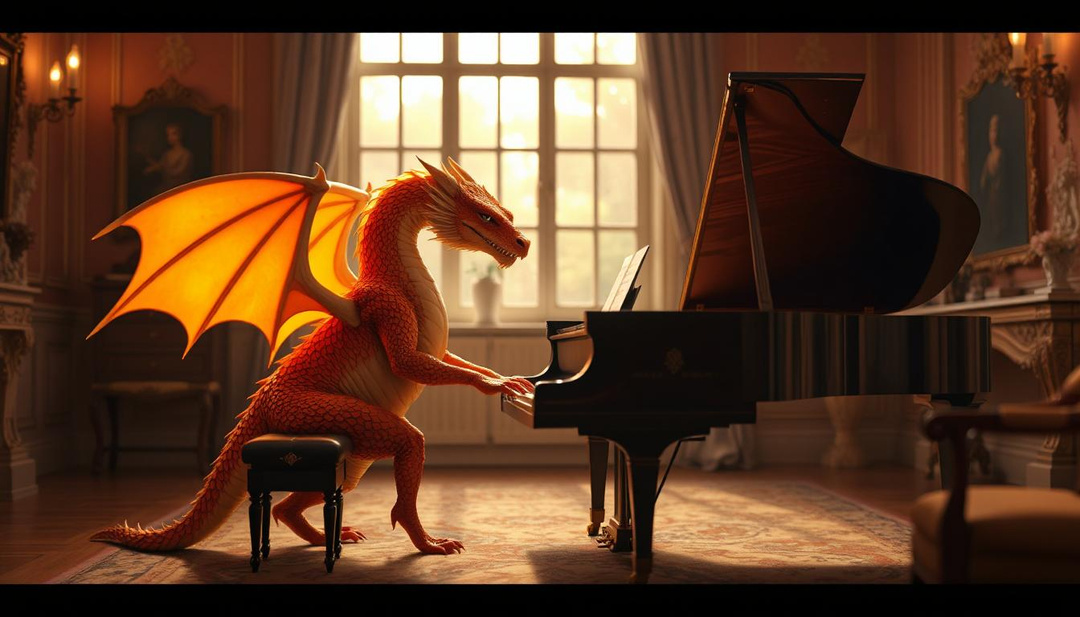
Most album art asks you to guess. The Piano Reveries album cover just tells you outright: here is a dragon, here is a grand piano, and the two of them are getting along beautifully. It is a strange image to put on a solo piano record, and it is the most honest summary of the music that twenty-two tracks could ask for.
So let’s actually look at it — not as a logo or a thumbnail, but as a picture with things in it.
The image: a dragon at the keys
The scene is a room, and the room is doing a lot of work. A black grand piano sits at the right of the frame with its lid raised, the great curved wing of it open toward the light. Sheet music is propped on the desk. Behind the piano, tall windows are flooded with a low golden sun, the kind of light that only shows up for about twenty minutes in the late afternoon and makes everything it touches look forgiven.
The room around it is old and ornate — framed portraits on papered walls, a wall sconce burning, heavy curtains, a patterned rug across the floorboards. It is a room where a piano has clearly lived for a very long time.
And at the keyboard is a dragon. Orange-red and scaled, wings lifted and glowing amber where the sunlight passes through the membrane, one clawed hand reaching down onto the keys. The bench has been nudged aside; the dragon is too big for it and has stopped pretending otherwise. There is no menace anywhere in the frame. The dragon is simply mid-phrase, and the room is listening.
Why Airy the Dragon, why a piano
The dragon is Airy — Airy the Dragon, the studio’s mascot and composer Michael Clinesmith’s own online persona. Every corner of Endtime Entrepreneurs carries the same character, which is why the album cover and the game store pages feel like they came from one place, because they did.
Putting Airy at a grand piano is a small joke that turns into a thesis. Dragons are supposed to be enormous and dangerous. Solo piano music is supposed to be delicate and restrained. The cover holds both at once and refuses to resolve the tension, which is exactly what the record does. There is real tenderness on this album — the hush of Jade’s Lullaby, the plain sincerity of For Grandma — sitting a few tracks away from the forward drive of Race and the footwork of Step and Dance.
A moody black-and-white portrait on the front would have promised one narrow mood and then broken that promise by track four. A dragon promises range.

There is a second reason a dragon belongs there, and it is practical. Michael writes music for games. A cover with a character on it says this composer builds worlds, which is a truer description of the work than “pianist” alone would manage.
Connecting the album to the studio’s games
Endtime Entrepreneurs is a studio that makes games and the music inside them, and the cover is where those two halves shake hands.
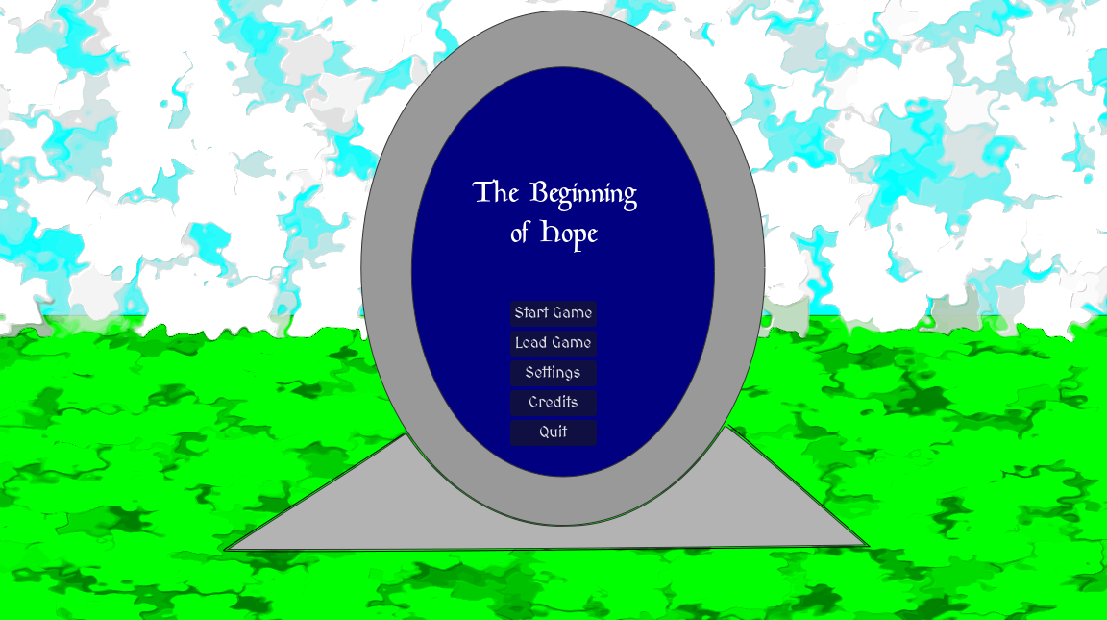
The flagship is Rebellion, an indie RPG on Steam with an original score written by the same hands that wrote this album — and if the music is what stays with you, the Rebellion Soundtrack DLC lets you keep it. There are smaller doors in, too: The Beginning of Hope and A Guinea’s World are free to play on itch.io, under the handle AiryTheDragon.
Once you know that, the cover reads differently. That ornate sunlit room is a set. It has the staging of a game scene — a location you would walk into, with a character already in it. The art isn’t borrowing fantasy imagery to look interesting. It is showing you the actual neighborhood the music comes from.
What the Piano Reveries album cover promises the listener
Every cover makes a promise. Here is what this one commits to, and how the record pays it off.
Warmth over prestige. Nothing about the image is austere. The colors are amber and firelight, not marble and shadow. The album keeps that temperature: The Joy in Life and Joyous are unguardedly bright, and even the reflective corners of the record — After the Storm, Working Through It — resolve toward comfort instead of ending in the cold.
Range, not a single mood. The music page lists genres running from classical to jazz to funk and soul, flamenco, chillwave, pop, and film score. That is a wide net for one instrument, and it is why the album can hold the formal three-movement Sonatina in G alongside something as loose and grinning as Bouncing Left Hand.
Play, always. The bench shoved aside is the detail that gives the whole thing away. This is not a recital. Titles like Play in the Grass, Two Beat, and Minor Major come from a composer who is enjoying himself, and the cover refuses to pretend otherwise.
Sincerity without stiffness. A cartoon dragon should undercut an emotional piano album. Somehow it does the opposite — it gives the sentiment permission to be direct. Lovely Night and Dance in D are unembarrassed pieces of music, and they arrive under an unembarrassed piece of art.
Hear the album behind the art
The cover has done its job if you want to press play, so here is where each door leads.
- Listen and buy: the whole of Piano Reveries is on the music page, where you can preview every track and buy the album outright or pick up singles. Spotify and Apple Music are on the way.
- Play it yourself: pianists can find the sheet music through Sheet Music Plus and Sheet Music Direct. These pieces have already proven they scale — the Vassar City Band performed the album live as a full ensemble in 2025.
- Play the games: start with Rebellion on Steam, or try the free itch.io titles above.
- Follow along: new music and studio updates land on YouTube.
- Support the studio: Patreon is the most direct way to keep a one-person studio writing both games and albums, with exclusive tracks and sheet music for members.
- Hire Michael: if you want a score with this warmth in your own game, film, or project, he takes commissions through SoundBetter.
A dragon at a piano in a golden room is a genuinely odd choice for a solo piano album, and that oddness is the point. It tells you, before a single note, that this record is going to be sincere without being solemn, ambitious without being cold, and made by someone who still finds the whole thing delightful.
If this resonated, you can listen to and buy Piano Reveries, learn more about the music, or get in touch about a custom score.

 Track Spotlight
 Track Spotlight: "The Joy in Life" — The Flamenco Spark of Piano Reveries
A spotlight on "The Joy in Life," the only flamenco track on Michael Clinesmith's Piano Reveries: where it sits on the album, what to listen for, and where to hear, buy, and play it.
 Track Spotlight
 Track Spotlight: "Lovely Night" — The Jazz Heart of Piano Reveries
A spotlight on "Lovely Night," the jazz piano track from Piano Reveries — one of Michael Clinesmith's earliest compositions, and where to hear, buy, and play it.
 The Studio
 Play It Yourself: Where to Find Michael Clinesmith's Sheet Music
A guide to finding Michael Clinesmith sheet music — where his piano scores are published, what Patreon members get, and how to go from listening to Piano Reveries to playing it.